Skip to content

Itemised written estimates · Stratford and the boroughs beside it · (856) 501-5623

Roofing Stratford
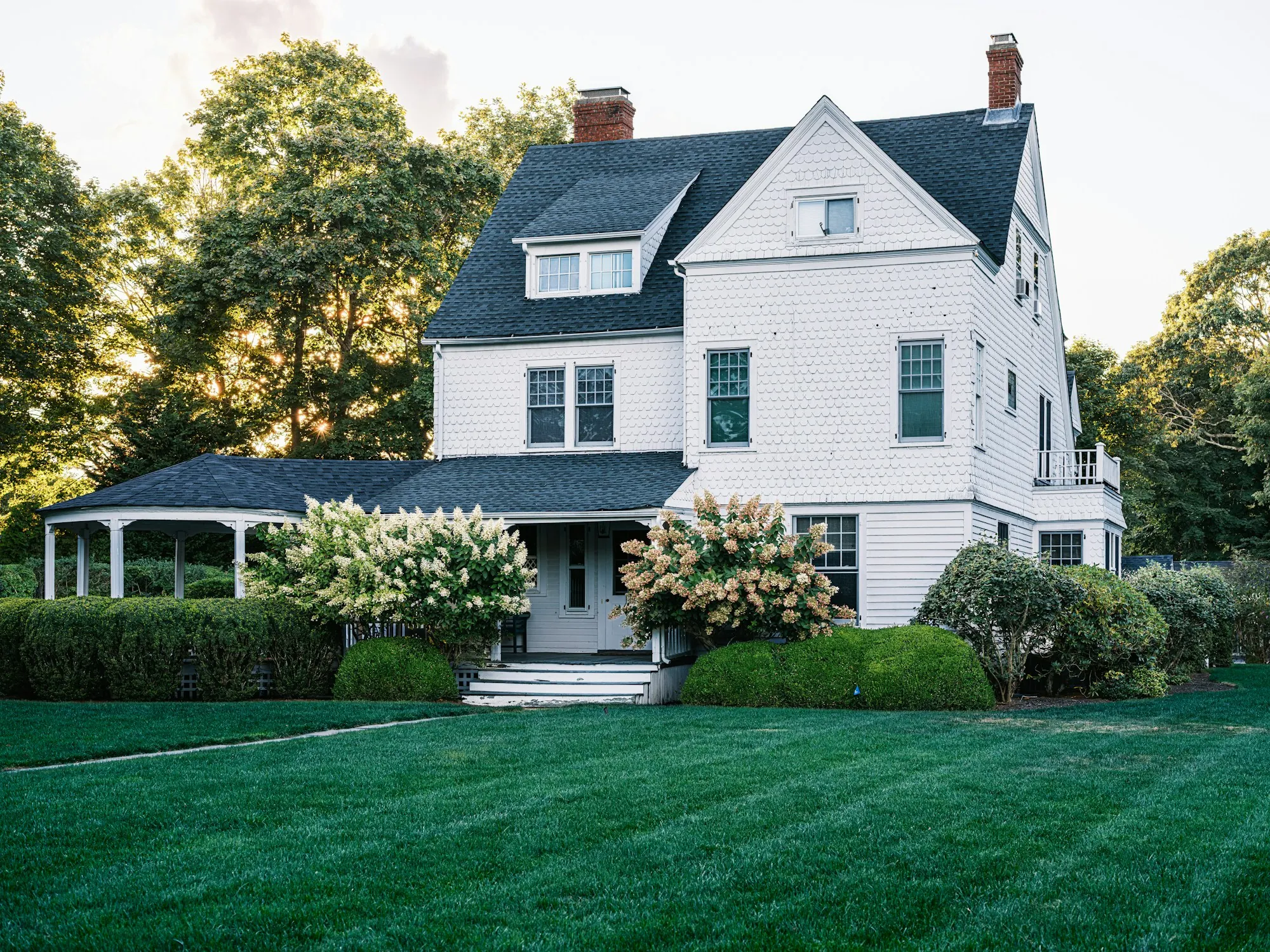
Large white house with a dark shingle roof and a front lawn

Stratford, New Jersey

Stratford Roofing, Priced Before Anybody Starts

Replacements, repairs, leak tracing, storm work, cladding and drainage — each one quoted on paper, with a quantity against every line, before a single bundle is lifted off the truck.

What arrives in writing

Squares of covering, sheets of decking, feet of edge metal, the count of vents and collars, the skip, the permit fee at cost — each with its own number beside it. One page you can set next to anybody else's.

What a price from here does differently

Most of what frustrates homeowners about roofing happens in the gap between the number quoted and the number owed. Everything below exists to close that gap.

A figure, not a span

A range is not a price. It is a way of being right whatever happens, and the top of it is what gets invoiced often enough for the habit to survive. What leaves here is one number for a defined scope, and the only thing that moves it is you asking for something different.

Every line carries a quantity

Thirty-one squares. Nine sheets. Ninety-four feet of edge metal. Four collars, two vents, one skip. Without the counts a quote cannot be compared with another quote, which is precisely why so many of them arrive without any.

Products named by model, not by adjective

"Architectural shingle" and "premium underlayment" describe a category, and categories have a cheap end. The estimate names the actual product and the actual gauge, so what turns up on the pallet can be checked against the page.

Nobody sells finance in your living room

No monthly figure, no today-only discount, no tablet turned round for a signature while the ladder is still against the wall. The estimate is emailed, you read it without anybody in the room, and you ring back whenever you are ready.

The price survives the tear-off

Soft decking is the standard reason a roofing bill grows mid-job. It is priced per sheet before anything is opened, so if nine sheets turn out to be fourteen you already know what five more cost. Nothing about that conversation is a surprise.

What happens, in order, and roughly when

Short, and the same on every job, so you always know which one you are standing in.

Step 1

The call

Five minutes on what prompted it, roughly how old the covering is and how the house is laid out. Enough to decide whether this wants a visit or just an answer.

Step 2

The measure

Somebody goes up. Planes measured rather than paced out, junctions photographed, the loft looked at from underneath where there is a hatch. Nothing is quoted off a satellite image.

Step 3

The page

The written price arrives within two working days: quantities, products, what is included and a short list of what is not. No visit attached to delivering it.

Step 4

The date

Booked against the forecast, not against our diary. A covering is never opened on a day that cannot also close it, so wet weather moves a start rather than producing a tarpaulin.

Step 5

The work

Strip, inspect the deck in front of you, correct what the page said would be corrected, then build back up. Any change is agreed and signed before it happens, never invoiced after.

Step 6

The hand-back

Photographs of the finished junctions, the permit paperwork, the product documents, and a magnet over the drive and the planting. The invoice matches the estimate line for line.

Why two quotes for the same roof differ by thousands

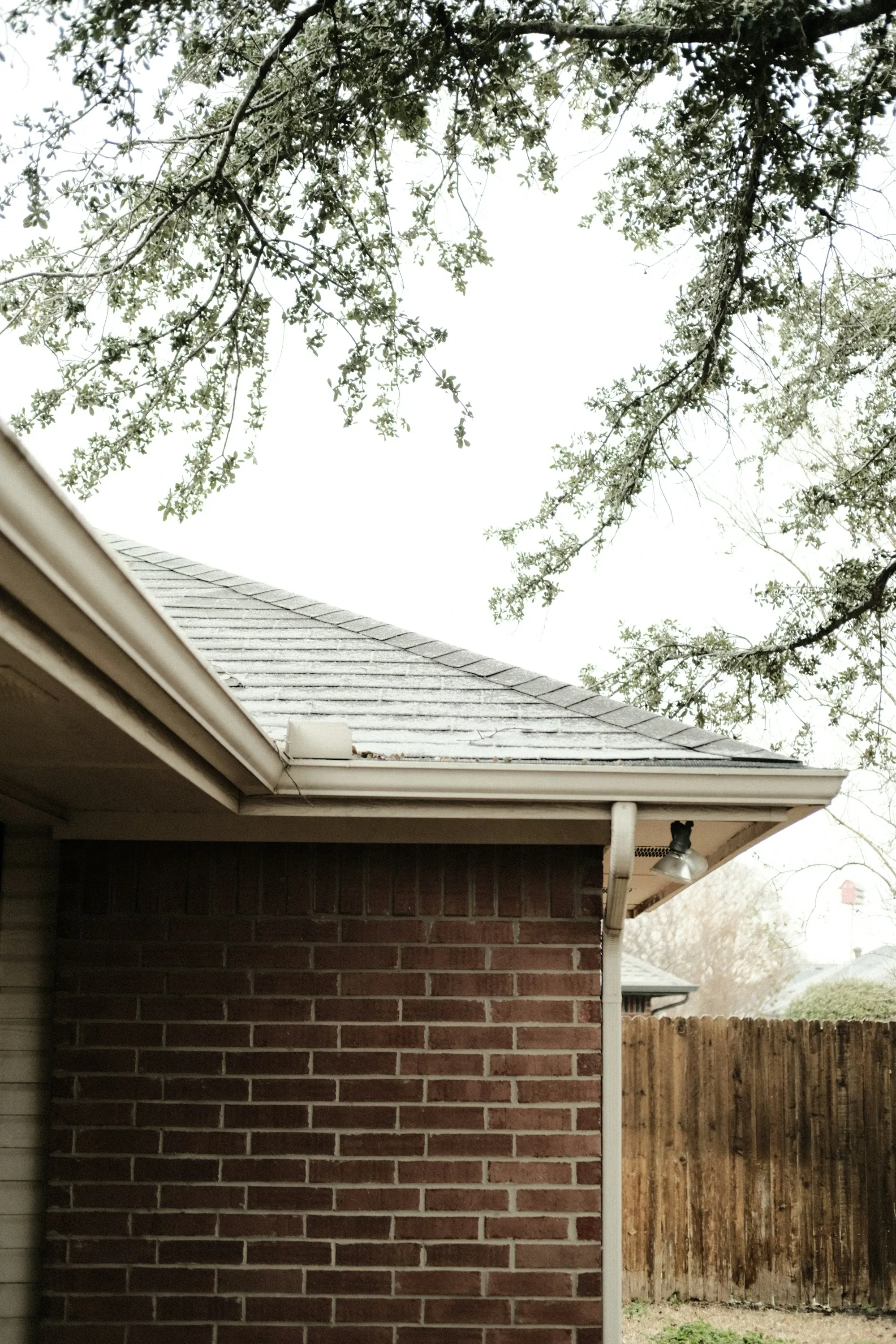
Roof plane and eave above a brick elevation

It is rarely greed and it is almost never the shingle. It is scope. One quote includes new edge metal, a starter course, replacing the collars and the ventilation arithmetic; the other assumes the existing edge is fine, uses cut tabs as a starter, reuses the collars and copies whatever ventilation was there before. Both are described as a new roof. One of them is, and the difference does not show from the pavement for about four years. Quantities on a page are the only way a homeowner can see which one they are being offered without owning a ladder.

What our pages include

Where the vans go

Stratford and the boroughs packed in around it, all inside a short drive, which is why a second visit is never a problem.

See the full list

  • Stratford
  • Laurel Springs
  • Somerdale
  • Lindenwold
  • Magnolia
  • Clementon
  • Blackwood
  • Hi-Nella

Find out what it costs without agreeing to anything

A measure, a page, and however long you want to think about it.

Questions that come up once the page is in front of you

Mostly about how a fixed price stays fixed, and about the details that separate one quote from another.

What can actually change the price once it is agreed?

Two things. You asking for something different — a better shingle, ridge vents added, the gutters renewed while the scaffold is up — which is priced and signed before anybody touches it. Or decking that turns out worse than the sheet count allowed for, which is why the page already carries a per-sheet rate. Nothing else. Not the weather, not an awkward pitch, not the skip filling faster than expected. Those are our problems and they were priced in.

Does the shingle grade matter as much as the sales pitch says?

It matters, but less than the detailing it sits on. A three-tab is a flat, single-layer strip and it is thin, light and the cheapest thing that keeps water out. An architectural shingle is two layers laminated together, heavier, better in wind and it hides a slightly uneven deck. The jump between those two is worth paying for. The jump from a good architectural to a designer line is largely about how it looks from the kerb, and a homeowner who wants that should buy it knowing that is what they are buying.

What does a cheap quote usually leave out?

Edge metal and a proper starter course, nearly every time. The starter is a purpose-made strip glued down under the first visible row; cutting the tabs off ordinary shingles to fake one is faster and it leaves the bottom edge without adhesive exactly where wind gets underneath. Edge metal is a thin folded length along the eaves and rakes that keeps water running into the gutter instead of behind it. Together they are a small fraction of a roof and they are the first two things to vanish from a number somebody is trying to win.

How many nails per shingle, and does it really matter?

Six rather than four on anything that faces weather, placed in the nailing strip rather than above it, and driven flush rather than through. It matters more than almost any upgrade on the page: a shingle fixed with four nails high of the strip will lift in a gust that a correctly fixed one ignores, and it also voids the manufacturer's own conditions. It costs a few dollars of nails and a little more time per square, and it is the single cheapest thing on a roof.

What happens if it rains halfway through?

No more covering is stripped than can be made watertight the same working day, so the exposed area at any moment is small and closeable. If a front arrives early, the open section is dried in, the crew stops, and the job resumes rather than sitting under sheeting for a week. That is also why a start date moves when the forecast turns — a date kept for the sake of the diary is how roofs end up wet inside.

Do the gutters have to come off for a replacement?

Usually not. They come off when the edge metal cannot be fitted properly with them in place, or when they are old enough that handling them will finish them. If they need removing, that is on the page before the start, with what going back up involves. What is never acceptable is tearing a roof off over fixed gutters and leaving them full of nails and granule, which is how a drainage run that had years left in it stops draining.

How do we choose the colour without regretting it?

Look at full boards in daylight against your own brick or cladding, never at a swatch under a lamp, and walk a street where that colour is already on a roof of roughly the same pitch. A shingle reads several shades lighter on a shallow pitch in full sun than the sample suggests. We will leave boards with you for a few days; it is the one decision on the whole job that nobody can make for you.

A small outfit that writes things down

Four or five of us, a short list of towns, houses rather than developments, and an estimate written plainly enough that you could read it aloud to another roofer and have them understand exactly what was agreed.

More about how we work

Get the number on paper

A measure, an itemised page, and no visit required to hand it over.